

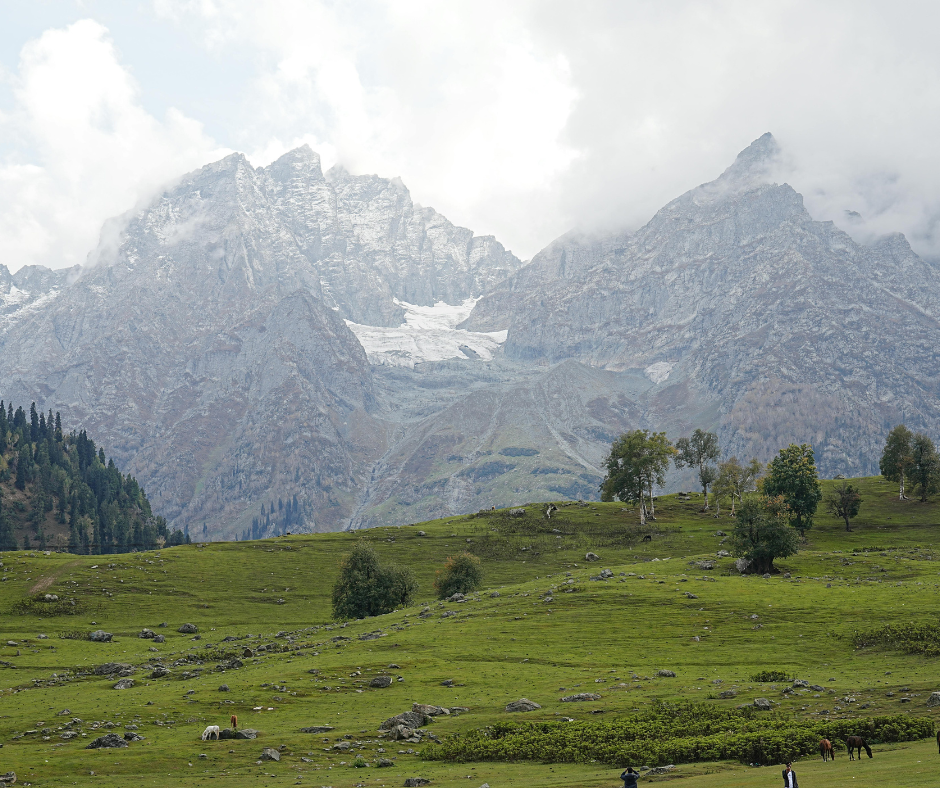
There are places you visit, and then there are places that visit you. Kashmir belongs to the second kind. Long after you leave, it stays with you in your breath, in your silence, in the way you start measuring beauty forever after. The phrase Paradise of Earth is not poetry invented for promotion. It is a confession made by history, nature, travelers, poets, and even conquerors who stood speechless before its reality.
Kashmir is called the Paradise of Earth because it feels unreal, yet it is real. Because it looks imagined, yet it exists. And because in a world losing touch with wonder, Kashmir still dares to be breathtaking.
A landscape that feels designed, not accidental
Kashmir’s beauty does not shout. It flows. Snow-capped mountains rise like guardians, not barriers. Rivers move with patience, not noise. Meadows stretch endlessly, carrying the scent of wildflowers and untouched earth. Dal Lake reflects the sky so clearly that you cannot tell where heaven ends and water begins.
Every season rewrites Kashmir’s identity. Spring awakens orchards with blossoms that look hand-painted. Summer turns valleys into emerald carpets. Autumn sets the trees on fire with gold and crimson. Winter silences the world under a blanket of snow so pure it feels sacred. This constant rebirth is why Kashmir never grows old. It keeps becoming itself again.
The spiritual calm you cannot photograph
Many places are beautiful. Few are peaceful. Kashmir holds a stillness that settles your mind without effort. The mountains do not intimidate. They protect. The air does not rush. It invites you to slow down.
This is why saints meditated here, poets wrote here, and souls healed here. Kashmir does not entertain you. It restores you. In a time where mental exhaustion has become normal, Kashmir feels like an answer humanity forgot to ask for.
A culture as rich as its soil
Paradise is not only scenery. Paradise is people. Kashmir’s culture carries centuries of wisdom, resilience, art, and grace. From intricate handicrafts to soulful music, from warm hospitality to deep-rooted traditions, Kashmir lives with dignity even after enduring pain.
The warmth of Kashmiri people contrasts gently with the cold of their winters. Their stories carry loss, hope, patience, and pride. This human depth gives Kashmir a beauty that landscapes alone can never achieve.
What history already confirmed
When Mughal emperor Jahangir said that if there is paradise on earth, it is here, he was not exaggerating. He was surrendering to truth. Empires came and went. Words remained. And centuries later, the world still repeats that line because no better one has been found.
Travelers across eras have struggled to describe Kashmir because language fails where experience begins. That failure itself is proof of its greatness.
Why this title matters now more than ever
Calling Kashmir the Paradise of Earth is not just admiration. It is responsibility. A paradise ignored is a paradise endangered. Climate change, careless tourism, and fading awareness threaten what generations were gifted for free.
This is the moment to rethink how we see, treat, and preserve Kashmir. Not as a destination to consume, but as a legacy to protect. Not as a headline, but as a heartbeat.
If we lose places like Kashmir, we lose more than beauty. We lose proof that the world can still be gentle.
The urgency we cannot delay
Kashmir does not need louder praise. It needs conscious respect. Sustainable travel, cultural preservation, and environmental responsibility are no longer optional. They are urgent. The Paradise of Earth must remain paradise, not memory.
To understand Kashmir is to realize that paradise is not somewhere else. It is fragile. It is alive. And it depends on what we choose to do next.
Kashmir is called the Paradise of Earth because it reminds humanity of what the world looked like before we forgot how to care.
Leave a Reply